
Redis Streams Endpoint
Use the Redis Streams endpoint when LoadStrike needs stream publish or consume behavior with predictable correlation settings.
Matching docs
Search across docs titles, summaries, groups, and section headings.
Use Up and Down Arrow to move through results, then press Enter to open the active page.
No indexed docs matched that search. Try a broader term or open the docs hub.
What this page helps you do
What this page helps you do
Use the Redis Streams endpoint when LoadStrike needs stream publish or consume behavior with predictable correlation settings.
Who this is for
Teams defining the transport-specific source or destination side of a correlated transaction.
Prerequisites
- A stable tracking field shared between the producer side and the consumer or completion side
By the end
A transport definition that matches the transaction you need to measure.
Use this page when
Use this page when Redis Streams Endpoint is the source or destination side of the transaction and you need the documented endpoint fields before wiring the scenario.
Visual guide
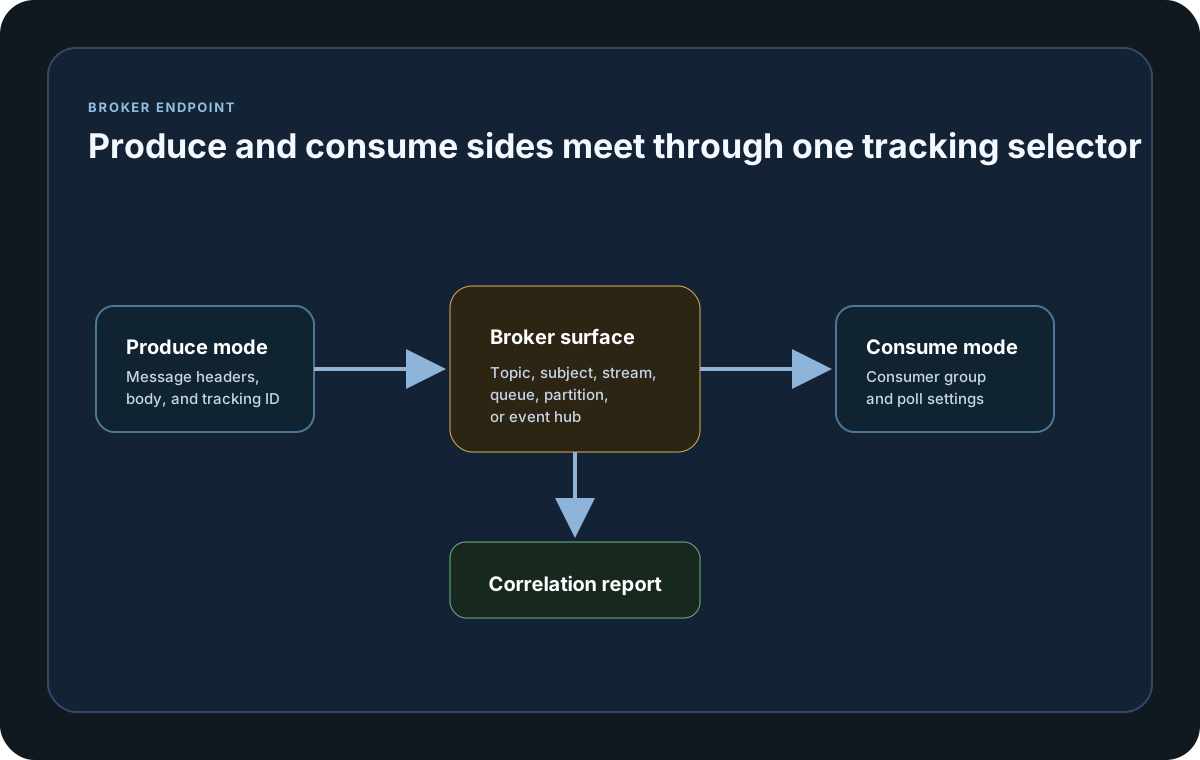
Guide
Core Fields
Start with ConnectionString, StreamKey, and Mode. ConsumerGroup and ConsumerName are required for consume mode so LoadStrike can read and acknowledge stream entries deterministically.
Read Behavior
Use StartFromEarliest to control where consumption begins and ReadCount to cap the batch size for each poll. This keeps stream polling predictable under sustained correlation workloads.
Retention And Payload Shape
MaxLength can cap stream growth on produce. Payloads are stored with body, content-type, and header:* fields so tracking selectors can still read from either headers or body.
Tracking Extraction
TrackingField and optional GatherByField use the same header or JSON selector syntax as other endpoints. The selector prefix is case-insensitive, but header names and JSON path segments are exact-case. MessagePayloadType and serializer settings are used when the tracking ID lives in the stream body.
Python Installation
Python native Redis Streams endpoints require `pip install loadstrike[redis]`. Use `pip install loadstrike[all-transports]` when the same test project needs every optional transport client.
Endpoint definition samples
Use these samples to see how Redis Streams Endpoint is represented as a source or destination endpoint before you attach it to a correlated scenario.
If you run these examples locally, add a valid runner key before execution starts. Set it with WithRunnerKey("...") or the config key LoadStrike:RunnerKey.
Redis Streams Endpoint
using LoadStrike;

var tracking = new CrossPlatformTrackingConfiguration
{
    Source = new HttpEndpointDefinition
    {
        Name = "orders-api",
        Mode = TrafficEndpointMode.Produce,
        TrackingField = TrackingFieldSelector.Parse("json:$.trackingId"),
        Url = "https://api.example.com/orders",
        Method = "POST",
        MessagePayload = new { trackingId = "trk-1001", amount = 49.95m }
    },
    Destination = new RedisStreamsEndpointDefinition
    {
        Name = "redis-stream-out",
        Mode = TrafficEndpointMode.Consume,
        TrackingField = TrackingFieldSelector.Parse("json:$.trackingId"),
        ConnectionString = "localhost:6379",
        StreamKey = "orders.completed",
        ConsumerGroup = "loadstrike-orders",
        ConsumerName = "consumer-1",
        ReadCount = 50
    }
};

var scenario = CrossPlatformScenarioConfigurator
    .Configure(LoadStrikeScenario.Empty("orders-http-to-redis-streams"), tracking)
    .WithLoadSimulations(LoadStrikeSimulation.Inject(10, TimeSpan.FromSeconds(1), TimeSpan.FromSeconds(20)));

LoadStrikeRunner.RegisterScenarios(scenario)
    .WithRunnerKey("rkl_your_local_runner_key")
    .Run();
package main
import loadstrike "loadstrike.com/sdk/go"
var redisStreamsEndpoint = &loadstrike.EndpointSpec{
Kind: "RedisStreams",
Name: "orders-stream",
Mode: "Consume",
TrackingField: "json:$.trackingId",
RedisStreams: &loadstrike.RedisStreamsEndpointOptions{
ConnectionString: "redis://127.0.0.1:6379",
StreamKey: "orders.completed",
ConsumerGroup: "orders-tests",
ConsumerName: "worker-1",
StartFromEarliest: true,
},
}import com.loadstrike.runtime.CrossPlatformScenarioConfigurator;
import com.loadstrike.runtime.CrossPlatformTrackingConfiguration;
import com.loadstrike.runtime.HttpEndpointDefinition;
import com.loadstrike.runtime.LoadStrikeCorrelation.TrackingFieldSelector;
import com.loadstrike.runtime.LoadStrikeRuntime.LoadStrikeRunner;
import com.loadstrike.runtime.LoadStrikeRuntime.LoadStrikeScenario;
import com.loadstrike.runtime.LoadStrikeRuntime.LoadStrikeSimulation;
import com.loadstrike.runtime.LoadStrikeTransports;
import com.loadstrike.runtime.RedisStreamsEndpointDefinition;
var source = new HttpEndpointDefinition();
source.name = "orders-api";
source.mode = LoadStrikeTransports.TrafficEndpointMode.Produce;
source.trackingField = TrackingFieldSelector.parse("json:$.trackingId");
source.url = "https://api.example.com/orders";
source.method = "POST";
source.messagePayload = java.util.Map.of("trackingId", "trk-1001", "amount", 49.95);
var destination = new RedisStreamsEndpointDefinition();
destination.name = "redis-stream-out";
destination.mode = LoadStrikeTransports.TrafficEndpointMode.Consume;
destination.trackingField = TrackingFieldSelector.parse("json:$.trackingId");
destination.connectionString = "localhost:6379";
destination.streamKey = "orders.completed";
destination.consumerGroup = "loadstrike-orders";
destination.consumerName = "consumer-1";
destination.readCount = 50;
var tracking = new CrossPlatformTrackingConfiguration();
tracking.source = source;
tracking.destination = destination;
var scenario = CrossPlatformScenarioConfigurator.Configure(
LoadStrikeScenario.empty("orders-http-to-redis-streams"),
tracking
).withLoadSimulations(LoadStrikeSimulation.inject(10, 1d, 20d));
LoadStrikeRunner
.registerScenarios(scenario)
.withRunnerKey("rkl_your_local_runner_key")
.run();from loadstrike_sdk import CrossPlatformScenarioConfigurator, LoadStrikeRunner, LoadStrikeScenario, LoadStrikeSimulation
tracking = {
"Source": {
"Kind": "Http",
"Name": "orders-api",
"Mode": "Produce",
"TrackingField": "json:$.trackingId",
"Url": "https://api.example.com/orders",
"Method": "POST",
"MessagePayload": {"trackingId": "trk-1001", "amount": 49.95},
},
"Destination": {
"Kind": "RedisStreams",
"Name": "redis-stream-out",
"Mode": "Consume",
"TrackingField": "json:$.trackingId",
"ConnectionString": "localhost:6379",
"StreamKey": "orders.completed",
"ConsumerGroup": "loadstrike-orders",
"ConsumerName": "consumer-1",
"ReadCount": 50,
},
}
scenario = (
CrossPlatformScenarioConfigurator.Configure(
LoadStrikeScenario.empty("orders-http-to-redis-streams"),
tracking,
)
.with_load_simulations(LoadStrikeSimulation.inject(10, 1, 20))
)
LoadStrikeRunner.register_scenarios(scenario) \
.with_runner_key("rkl_your_local_runner_key") \
.run()import {
CrossPlatformScenarioConfigurator,
LoadStrikeRunner,
LoadStrikeScenario,
LoadStrikeSimulation,
TrackingFieldSelector
} from "@loadstrike/loadstrike-sdk";
const tracking = {
Source: {
Kind: "Http",
Name: "orders-api",
Mode: "Produce",
TrackingField: new TrackingFieldSelector("Json", "$.trackingId"),
Url: "https://api.example.com/orders",
Method: "POST",
MessagePayload: { trackingId: "trk-1001", amount: 49.95 }
},
Destination: {
Kind: "RedisStreams",
Name: "redis-stream-out",
Mode: "Consume",
TrackingField: new TrackingFieldSelector("Json", "$.trackingId"),
ConnectionString: "localhost:6379",
StreamKey: "orders.completed",
ConsumerGroup: "loadstrike-orders",
ConsumerName: "consumer-1",
ReadCount: 50
}
};
const scenario = CrossPlatformScenarioConfigurator
.Configure(LoadStrikeScenario.empty("orders-http-to-redis-streams"), tracking)
.withLoadSimulations(LoadStrikeSimulation.inject(10, 1, 20));
await LoadStrikeRunner
.registerScenarios(scenario)
.withRunnerKey("rkl_your_local_runner_key")
.run();const {
CrossPlatformScenarioConfigurator,
LoadStrikeRunner,
LoadStrikeScenario,
LoadStrikeSimulation,
TrackingFieldSelector
} = require("@loadstrike/loadstrike-sdk");
(async () => {
const tracking = {
Source: {
Kind: "Http",
Name: "orders-api",
Mode: "Produce",
TrackingField: new TrackingFieldSelector("Json", "$.trackingId"),
Url: "https://api.example.com/orders",
Method: "POST",
MessagePayload: { trackingId: "trk-1001", amount: 49.95 }
},
Destination: {
Kind: "RedisStreams",
Name: "redis-stream-out",
Mode: "Consume",
TrackingField: new TrackingFieldSelector("Json", "$.trackingId"),
ConnectionString: "localhost:6379",
StreamKey: "orders.completed",
ConsumerGroup: "loadstrike-orders",
ConsumerName: "consumer-1",
ReadCount: 50
}
};
const scenario = CrossPlatformScenarioConfigurator
.Configure(LoadStrikeScenario.empty("orders-http-to-redis-streams"), tracking)
.withLoadSimulations(LoadStrikeSimulation.inject(10, 1, 20));
await LoadStrikeRunner
.registerScenarios(scenario)
.withRunnerKey("rkl_your_local_runner_key")
.run();
})();Redis Streams endpoint fields and parameters
Required endpoint identifier. It appears in correlation tables, sink exports, and troubleshooting messages, so choose a stable descriptive name.
Choose Produce when LoadStrike should create traffic, or Consume when it should listen for downstream traffic. Run mode validation checks that the selected mode matches the source or destination role.
Selector that extracts the correlation id from a header or JSON body. It is normally required, but can be omitted when UseLoadStrikeTraceIdHeader is true so LoadStrike uses header:loadstrike-trace-id for generated source traffic. Selector prefixes such as header: and json: are parsed case-insensitively, but the header name or JSON path segments after the prefix must match exact casing. The extracted value is matched case-sensitively by default unless TrackingFieldValueCaseSensitive is turned off on the tracking configuration.
Optional destination-only selector used for grouped correlation reports. It follows the same selector-casing rules as TrackingField. Group values are grouped case-sensitively by default unless GatherByFieldValueCaseSensitive is turned off on the tracking configuration.
Defaults to true. When the source payload does not already contain the tracked id, LoadStrike can inject one so the generated traffic still produces a correlation key.
Defaults to false. When true and TrackingField is omitted, produced source messages receive a loadstrike-trace-id header with a GUID value. Consume-mode source endpoints and CorrelateExistingTraffic runs do not inject this header; they only observe it if the existing traffic already contains it.
Controls how often a consumer-style endpoint polls for new messages. The value must stay greater than zero whenever you set it explicitly.
Optional headers that are written with produced traffic and also influence tracking extraction when the selector targets headers. Header names are preserved exactly as you set them, and header selectors later match using that same exact casing.
Optional object or body value sent by producer-style endpoints. This is the payload your scenario is actually placing on the wire.
Optional type hint used when JSON selectors need typed parsing. Leave it unset when dynamic JSON parsing is enough.
Optional serializer settings for System.Text.Json or Newtonsoft.Json. Use them only when the payload shape or naming strategy requires custom parsing behavior.
Optional explicit content type for custom payload handling. This is most helpful for delegate-style transports or non-default HTTP body shapes.
Required Redis connection string.
Required Redis stream name used for the tracked workflow.
Required for consume mode so Redis can coordinate tracked reads.
Required for consume mode so each reader inside the consumer group has a stable identity.
Defaults to true. Use it when the run should begin at the start of the stream instead of only new entries.
Batch size for each Redis read operation. It must be greater than zero.
Optional producer-side stream cap. When you set it, the value must be greater than zero.
{ "trackingId": "trk-1", "status": "completed" }