
OTEL Collector
Use the OTEL Collector sink when the team already standardizes on OpenTelemetry collector pipelines. This page explains the OTLP/HTTP path that LoadStrike uses.
Matching docs
Search across docs titles, summaries, groups, and section headings.
Use Up and Down Arrow to move through results, then press Enter to open the active page.
No indexed docs matched that search. Try a broader term or open the docs hub.
What this page helps you do
What this page helps you do
Use the OTEL Collector sink when the team already standardizes on OpenTelemetry collector pipelines. This page explains the OTLP/HTTP path that LoadStrike uses.
Who this is for
Teams exporting final run data and realtime metrics into supported observability backends.
Prerequisites
- A run result or sink destination you want to wire into the wider observability stack
By the end
A sink-specific setup path that stays tied to the same LoadStrike report model.
Use this page when
Use this page when the local report is not the only destination and you need to wire realtime or final export into a supported sink.
Visual guide
Sample Report Data Rows
Scope    Scenario     Result Count RPS  LatencyP50Ms LatencyP80Ms LatencyP85Ms LatencyP90Ms LatencyP95Ms LatencyP99Ms
Scenario reports-demo OK     675   15.0 21.4         30.2         33.0         36.8         48.6         72.1

LatencyTable Scenario     Result Count LatencyP50Ms LatencyP95Ms
LatencyTable reports-demo OK     675   21.4         48.6
LatencyTable reports-demo FAIL   12    35.9         79.2

StatusCode Result Percent
200        OK     97.48
500        FAIL   2.52

FailedStatus Scope     Scenario     Step StatusCode Count Percent
FailedStatus Scenario  reports-demo      500       12    1.75
Reporting
Realtime reporting
Choose Portal Reporting when users should review runs in the customer portal, pick the built-in sink page that matches the backend your team already runs, or open Custom Reporting when you need to implement your own destination. Each tab opens a dedicated page with the settings, behavior, and lifecycle details for that reporting path.
Guide
When To Use OTEL Collector
Choose OTEL Collector when the organization standardizes on OpenTelemetry collector pipelines or on a vendor backend that already accepts OTLP/HTTP.
What LoadStrike Sends
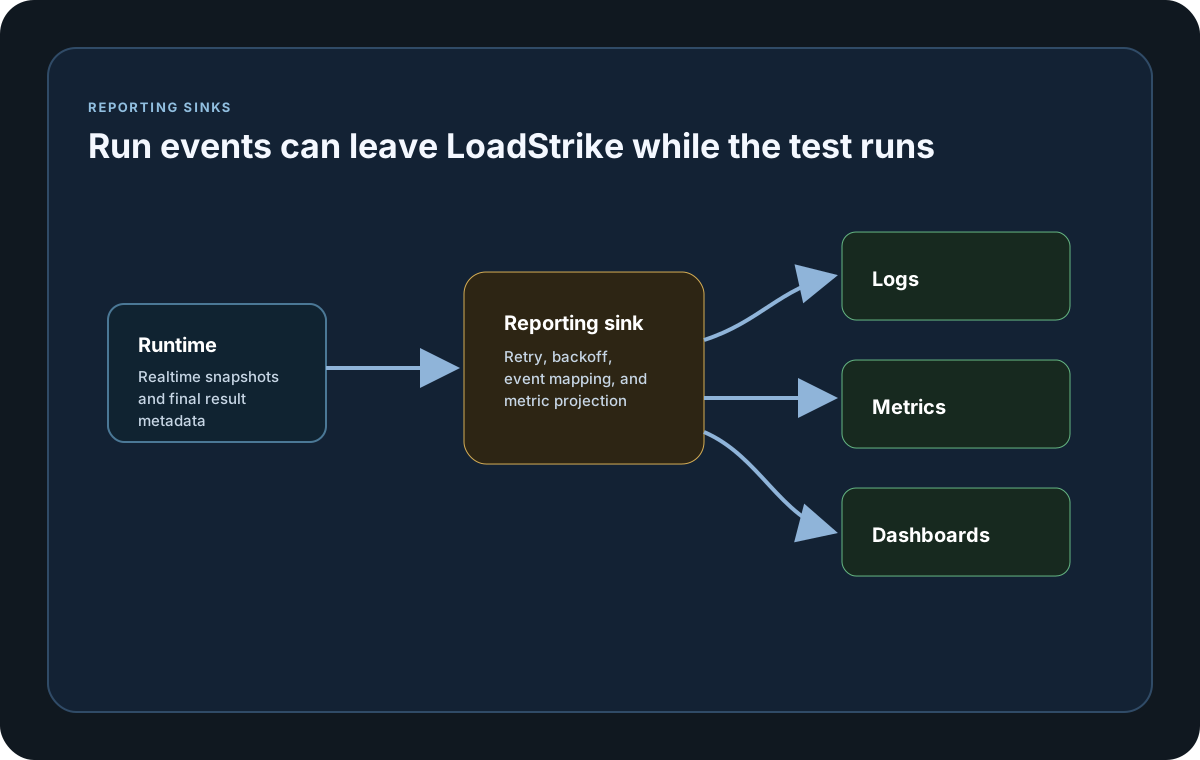
OtelCollectorReportingSink sends OTLP/HTTP logs and metrics through the configured endpoint. Final metric snapshots and run-result metadata travel through the same collector flow.
Configuration Surface
Configure the sink in code or through LoadStrike:ReportingSinks:OtelCollector. Common options include BaseUrl, Headers, and StaticResourceAttributes.
Downloads
OTEL Collector setup is supported through the downloadable JSON infra-config template and the shared observability asset guide.
OTEL Collector realtime reporting
Use OtelCollectorReportingSink when you want OTLP/HTTP logs and metrics sent through an OpenTelemetry collector pipeline.
If you run these examples locally, add a valid runner key before execution starts. Set it with WithRunnerKey("...") or the config key LoadStrike:RunnerKey.
HTML reports include a top-right Light/Dark theme toggle and responsive offline SVG charts. Use exact-value tooltips, legends, zoom, pan, reset, the accessible expanded view, chart-title search, and grid-density controls to inspect dense results. Light is the default report theme.
OTEL Collector Sink
using LoadStrike;

var scenario = LoadStrikeScenario.Empty("orders-realtime-reporting")
    .WithLoadSimulations(LoadStrikeSimulation.Inject(20, TimeSpan.FromSeconds(1), TimeSpan.FromSeconds(120)));

var sink = new OtelCollectorReportingSink(new OtelCollectorReportingSinkOptions
{
    BaseUrl = "https://otel.example.com",
    Headers =
    {
        ["Authorization"] = "Bearer otel-token"
    },
    StaticResourceAttributes =
    {
        ["deployment.environment"] = "production-like",
        ["service.name"] = "payments"
    }
});

LoadStrikeRunner.RegisterScenarios(scenario)
    .WithReportingSinks(sink)
    .WithRunnerKey("rkl_your_local_runner_key")
    .Run();
package main
import loadstrike "loadstrike.com/sdk/go"
var otelSink = loadstrike.OtelCollectorReportingSink{
Options: loadstrike.OtelCollectorReportingSinkOptions{
BaseURL: "http://127.0.0.1:4318",
Headers: map[string]string{
"x-tenant": "tenant-a",
},
},
}import com.loadstrike.runtime.LoadStrikeRuntime.LoadStrikeRunner;
import com.loadstrike.runtime.LoadStrikeRuntime.LoadStrikeScenario;
import com.loadstrike.runtime.LoadStrikeRuntime.LoadStrikeSimulation;
import com.loadstrike.runtime.LoadStrikeSinks;
var scenario = LoadStrikeScenario.empty("orders-realtime-reporting")
.withLoadSimulations(LoadStrikeSimulation.inject(20, 1d, 120d));
var options = new LoadStrikeSinks.OtelCollectorSinkOptions();
options.baseUrl = "https://otel.example.com";
options.headers.put("Authorization", "Bearer otel-token");
options.staticResourceAttributes.put("deployment.environment", "production-like");
options.staticResourceAttributes.put("service.name", "payments");
var sink = new LoadStrikeSinks.OtelCollectorReportingSink(options);
LoadStrikeRunner.registerScenarios(scenario)
.withReportingSinks(sink)
.withRunnerKey("rkl_your_local_runner_key")
.run();from loadstrike_sdk import LoadStrikeRunner, LoadStrikeScenario, LoadStrikeSimulation, OtelCollectorReportingSink
scenario = (
LoadStrikeScenario.empty("orders-realtime-reporting")
.with_load_simulations(LoadStrikeSimulation.inject(20, 1, 120))
)
sink = OtelCollectorReportingSink(
base_url="https://otel.example.com",
headers={
"Authorization": "Bearer otel-token",
},
static_resource_attributes={
"deployment.environment": "production-like",
"service.name": "payments",
},
)
LoadStrikeRunner.register_scenarios(scenario) \
.with_reporting_sinks(sink) \
.with_runner_key("rkl_your_local_runner_key") \
.run()import {
LoadStrikeRunner,
LoadStrikeScenario,
LoadStrikeSimulation,
OtelCollectorReportingSink,
OtelCollectorReportingSinkOptions
} from "@loadstrike/loadstrike-sdk";
const scenario = LoadStrikeScenario
.empty("orders-realtime-reporting")
.withLoadSimulations(LoadStrikeSimulation.inject(20, 1, 120));
const sink = new OtelCollectorReportingSink(new OtelCollectorReportingSinkOptions({
BaseUrl: "https://otel.example.com",
Headers: {
Authorization: "Bearer otel-token"
},
StaticResourceAttributes: {
"deployment.environment": "production-like",
"service.name": "payments"
}
}));
await LoadStrikeRunner
.registerScenarios(scenario)
.withReportingSinks(sink)
.withRunnerKey("rkl_your_local_runner_key")
.run();const {
LoadStrikeRunner,
LoadStrikeScenario,
LoadStrikeSimulation,
OtelCollectorReportingSink,
OtelCollectorReportingSinkOptions
} = require("@loadstrike/loadstrike-sdk");
(async () => {
const scenario = LoadStrikeScenario
.empty("orders-realtime-reporting")
.withLoadSimulations(LoadStrikeSimulation.inject(20, 1, 120));
const sink = new OtelCollectorReportingSink(new OtelCollectorReportingSinkOptions({
BaseUrl: "https://otel.example.com",
Headers: {
Authorization: "Bearer otel-token"
},
StaticResourceAttributes: {
"deployment.environment": "production-like",
"service.name": "payments"
}
}));
await LoadStrikeRunner
.registerScenarios(scenario)
.withReportingSinks(sink)
.withRunnerKey("rkl_your_local_runner_key")
.run();
})();OtelCollectorReportingSinkOptions fields
Defaults to LoadStrike:ReportingSinks:OtelCollector when binding from infra config.
Required collector base URL.
OTLP/HTTP path used for log exports.
OTLP/HTTP path used for metric exports.
HTTP timeout for collector calls.
Additional request headers such as Authorization.
Resource attributes attached to exported OTLP telemetry.
{
  "LoadStrike": {
    "ReportingSinks": {
      "OtelCollector": {
        "BaseUrl": "https://otel.example.com",
        "Headers": {
          "Authorization": "Bearer otel-token"
        }
      }
    }
  }
}
Downloads and templates
Use the OTEL Collector template when you want to load sink settings from infra config.
OTEL Collector template JSON
A ready-to-edit infra-config template for OtelCollectorReportingSink.
Download fileObservability asset guide
A combined guide for sink templates and Grafana starter assets.
Download file