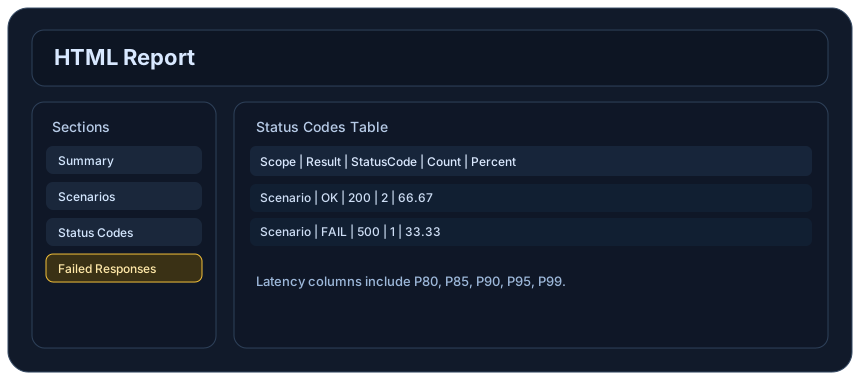
Reliable event-driven performance testing starts with a stable correlation contract. The most useful tracking field is usually one that already represents business continuity across systems, such as an order identifier, payment identifier, workflow identifi...
Teams rarely struggle because they lack raw numbers. They struggle because their reports do not explain where latency entered the transaction path, which workloads degraded first, or how failure patterns changed as concurrency increased. A report that only...
Many load tests begin with an endpoint and end with a throughput chart. That works for simple request-response services, but it breaks down when user-visible latency depends on downstream consumers, browser interactions, cache invalidation, or asynchronous...
Browser performance work becomes expensive very quickly when teams attempt to automate every path at high concurrency. The better approach is to choose the journeys that materially affect revenue, adoption, or operational confidence, then model those journe...
Kafka throughput is easy to measure and easy to misunderstand. A cluster may accept published messages quickly while downstream consumers, state stores, enrichment services, and side-effect processors fall behind enough to break business expectations. Measu...
Many teams start performance work by pointing traffic at one endpoint and watching request latency. That is a valid baseline, but it becomes incomplete when the real workflow continues through browser state, background workers, queues, streams, or other ser...
LoadStrike is a code-first load testing and performance testing product built for teams that want repeatable, reviewable performance tests—starting simple and scaling to deeper transaction checks. For teams comparing product categories, LoadStrike is posi...
In today's digital landscape, ensuring that your APIs perform under varying load conditions is paramount. The right **api load testing tool** can help teams gauge the robustness of their applications as they scale. Understanding how to choose an effective t...
As organizations evolve towards microservices architectures, the complexity of testing increases. One of the key testing methodologies gaining traction is event-driven load testing. This approach not only addresses the unique challenges posed by microservic...
Kafka is widely recognized as a powerful distributed messaging system, enabling seamless event streaming and real-time data processing. However, organizations often focus solely on producer throughput in their Kafka load testing efforts, which can lead to i...
In today’s technology landscape, ensuring the seamless performance of applications is paramount to user satisfaction. As part of an overarching performance testing strategy, browser load testing assesses the capability of web applications to handle high l...
In the world of web application performance, ensuring that users have a smooth and efficient experience is vital. While backend-only performance tests can provide valuable insights, incorporating Playwright load testing into your performance strategy can en...
As software applications evolve, more organizations are leaning into technologies like gRPC and WebSocket for their ability to handle real-time data exchange and efficient communication between services. In this blog, we'll explore how LoadStrike, a versati...
The demand for robust applications necessitates effective load testing to ensure that systems perform optimally under stress. LoadStrike addresses this by offering a performance testing tool that allows teams to conduct multi-language load testing. By enabl...
Performance testing is crucial for ensuring the reliability and efficiency of applications. Developers often grapple with the challenge of integrating performance testing into their workflows without overwhelming changes. LoadStrike offers a competitive sol...
Performance testing is vital for ensuring that applications deliver reliable and efficient user experiences. By using a specialized performance testing tool, teams can gauge how their applications handle varying loads, ensuring that performance metrics meet...
Load testing is crucial in ensuring your application performs well under expected traffic conditions. This is particularly important for distributed systems where traditional testing can fall short. LoadStrike stands out as a load testing software designed...
Performance testing is an essential component of software development, especially in today’s world of continuous integration and delivery (CI/CD). With the increasing complexity of applications, it’s critical that your performance testing software fits...
Load testing is a critical process for ensuring that applications can handle the expected user load. Many organizations seek out a load testing tool that offers robustness, reliability, and adaptability. For teams aiming to optimize their application perfor...
API performance testing is an essential practice for teams looking to ensure their applications are reliable and fast. LoadStrike serves as a powerful load and performance testing tool, designed to assist teams in validating their APIs under various conditi...
Choosing the right API load testing tool is essential for teams engaged in performance testing. LoadStrike stands out as a **performance testing software** that allows for detailed evaluation of how APIs perform under both normal and peak traffic conditions...
In today's software landscape, microservices architecture has become a prevalent choice for building scalable applications. However, ensuring the performance of such distributed systems introduces unique challenges, particularly when it comes to event-drive...
Kafka is a widely-used message broker that allows different systems to communicate asynchronously. When implementing Kafka, it’s crucial not only to test the producer's throughput but also to assess the performance of the entire distributed system, includ...
In the modern digital landscape, ensuring optimal application performance is critical for user satisfaction and retention. While APIs have traditionally taken center stage in performance discussions, the significance of browser load testing is equally vital...
When assessing web application performance, load testing is a critical aspect that helps ensure reliability and speed under user traffic. While traditional backend load testing is essential, incorporating Playwright load testing brings additional insights t...
As applications evolve, the need for effective gRPC and WebSocket load testing becomes critical. Traditional HTTP-based testing methodologies often fall short when applied to non-HTTP services. LoadStrike addresses this gap by providing developers and QA te...
Load testing is a critical component of application development, ensuring that software can handle expected traffic. As teams increasingly adopt diverse technologies, the need for a flexible, multi-language load testing solution has never been greater. Load...
In today's fast-paced software development environment, ensuring application performance is critical. Performance testing software for developers is designed to help teams conduct performance tests efficiently within their existing workflows. LoadStrike sta...
Selecting the right performance testing tool is crucial for ensuring your applications can handle expected traffic loads and function seamlessly. This guide focuses on performance testing of APIs, browser workflows, event streams, and transaction-focused sc...
### Overview of Load Testing Software For teams comparing product categories, LoadStrike is positioned as a load testing tool, performance testing tool, load testing software, performance testing software, and load and performance testing tool for code-firs...