
LoadStrike focuses on workflows that cross APIs, queues, services, and browsers.
About
Built for end-to-end performance answers.
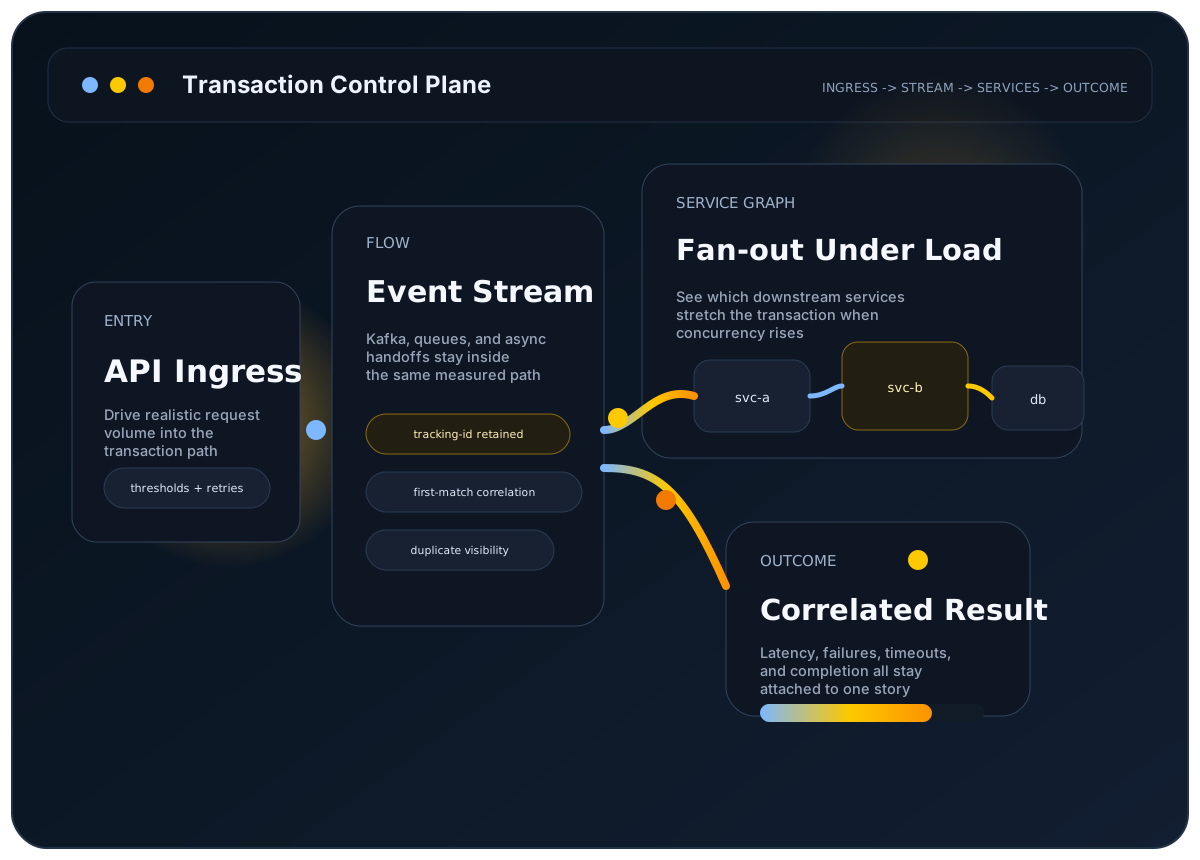
LoadStrike helps engineering teams test real transactions across APIs, event streams, services, and user journeys.
The product stays code-first so engineering teams can keep load tests close to the systems they maintain.
Correlation, grouped reports, and distributed execution are built in.
What LoadStrike is designed to solve
Many load tools stop at one protocol. LoadStrike follows the full path, so a test can start at an API, continue through events, and report the final result.
This matters when one business transaction depends on several systems.
Who typically uses it
LoadStrike is for platform teams, QA engineers, SREs, and performance engineers working on distributed systems.
It is useful when APIs, events, background workers, or distributed load all matter to the result.
Public trust and ownership signals
Public product, comparison, and benchmark pages are kept aligned with the current product so engineers can evaluate it clearly.
Read the company profile and evaluation paths.
See how product and comparison content is reviewed.
See how benchmark claims should be handled.
Review self-hosted execution and data handling.
Open examples, quick starts, and product docs.
Get started
Start testing real transactions today.
See the product model, examples, and docs for your team.