LoadStrike /LoadStrike and Splunk HEC
See how the LoadStrike Splunk HEC sink fits into transaction-aware reporting workflows.
Direct answer
What does the Splunk HEC integration cover?
The Splunk HEC integration is the built-in LoadStrike reporting sink for teams that already route observability data through Splunk. The site documents the configuration surface and publishes a ready-to-edit JSON template for the sink.
That makes it easier to keep transaction-aware LoadStrike runs self-hosted while still exporting reporting events and projected metrics to a backend the team already uses operationally.
Quick setup
- Open the sink-specific docs to confirm the supported configuration surface.
- Download the published starter asset that matches your backend and environment.
- Run a scenario and confirm the sink output alongside the local LoadStrike report artifacts.
Download assets
Who this is for
Teams already using Splunk HEC for logs or event flows and wanting LoadStrike run data in the same environment.
Why endpoint-only testing breaks down here
Request-only reporting loses value when the important signal is the transaction that finished late or failed downstream. That signal becomes more useful when the final run artifact also has a clean path into the team’s existing observability workflow.
How LoadStrike fits
LoadStrike documents Splunk HEC as a built-in sink, supports code or infra-config setup, and publishes a downloadable JSON template plus the shared observability asset guide.
What to expect
Verified LoadStrike fit points
- Built-in Splunk HEC reporting sink documented publicly.
- Public JSON template for the Splunk HEC path.
- Documents event and projected-metric export in the same sink flow.
- Local reports and final sink metadata remain attached to the same run artifact.
Resources
Docs and downloads
These public assets already exist for the Splunk HEC workflow.
Read the sink behavior and configuration surface.
Download the ready-to-edit infra config template.
Open the shared guide that groups the public assets.
Common questions
Common questions
Is Splunk HEC a built-in LoadStrike sink?
Yes. The docs describe Splunk HEC as a built-in reporting sink for Enterprise and explain how the sink is configured.
Does the site include a Splunk template?
Yes. The downloads include a Splunk HEC JSON template plus the shared observability asset guide.
What should I read after this page?
Open the Splunk HEC sink docs, the realtime reporting landing page, and the reports overview so the sink-specific workflow stays connected to the full transaction run artifact.
Related
Related documentation
Start with the implementation details that match this page.
Use the Splunk HEC sink when you want LoadStrike reporting events and projected metrics delivered through Splunk.
Realtime reporting streams LoadStrike data to the customer portal or external backends during the run and again when the run finishes.
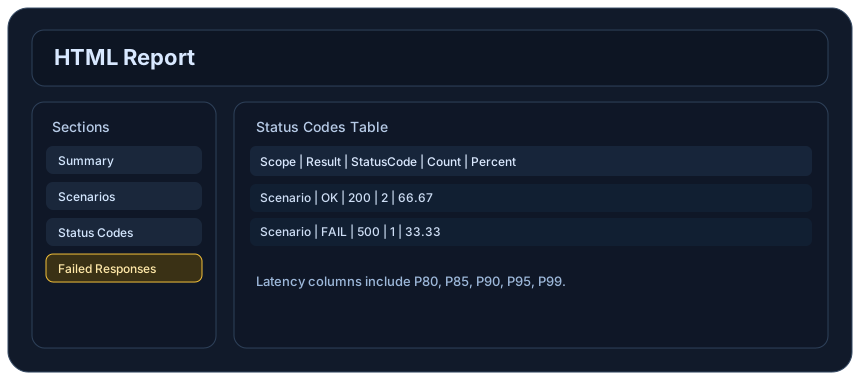
This page explains how to read a LoadStrike report. Use it when you want to know what each section means and where to look first.
Related
Related comparisons
Use these comparison pages if you still need a tool-level decision.
Compare LoadStrike and Apache JMeter for async completion, JMS, browser execution, reports and self-hosted testing, including setup and licensing requirements.
Related
Related integrations
Connect the run output to the observability backend your team already uses.
See how the LoadStrike Datadog sink fits into transaction-aware, self-hosted load testing workflows.
See how the LoadStrike OTEL Collector sink fits into OpenTelemetry-oriented reporting workflows.
Related
Next steps
Keep moving with the most relevant follow-up pages.
See how cluster runs still land in one reporting story.
Return to the workload model behind the sink export.
Open the docs and sample-reference entry points tied to the same reporting story.
Next step
Next step
Download the Splunk template, wire the HEC endpoint, and confirm that the exported run data still lines up with the local report and threshold outcome.