
Short answer
Browser load testing is essential for understanding how web applications perform under load. LoadStrike provides a powerful framework for both browser and API performance testing.
Explore how browser load testing fits into your overall performance strategy using LoadStrike for effective performance testing across APIs and web apps.
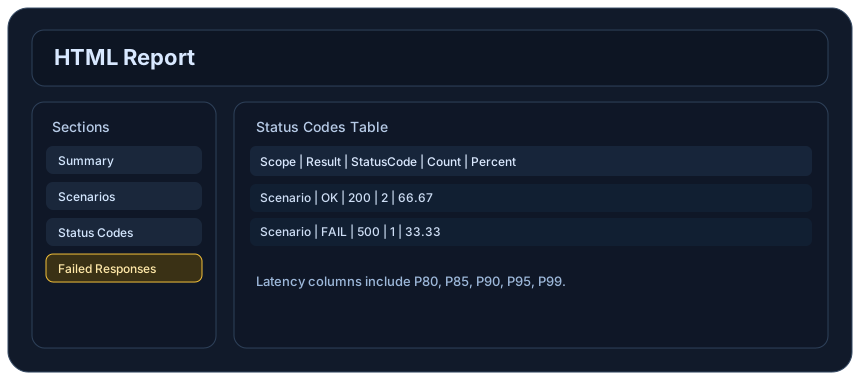
Browser load testing is essential for understanding how web applications perform under load. LoadStrike provides a powerful framework for both browser and API performance testing.
Read this article when you need to understand the role of browser load testing in overall application performance and how to implement it effectively.
Start with the article for context, then move into the linked docs and category pages for the concrete runtime, protocol, or reporting setup.
In the modern digital landscape, ensuring optimal application performance is critical for user satisfaction and retention. While APIs have traditionally taken center stage in performance discussions, the significance of browser load testing is equally vital. This article will delve into how browser load testing fits within the broader story of performance testing, covering tools like LoadStrike, especially its integration with Playwright and Selenium. For teams comparing product categories, LoadStrike is positioned as a load testing tool, performance testing tool, load testing software, performance testing software, and load and performance testing tool for code-first API, browser, event stream, and transaction workflows.
LoadStrike stands out as a code-first load testing and performance testing product. It allows engineering, QA, and SRE teams to conduct thorough tests on both APIs and browser workflows. By effectively bridging the gap between backend and frontend performance metrics, LoadStrike elevates your performance testing strategies to ensure seamless user experiences.
### Understanding Browser Load Testing Browser load testing specifically evaluates how web applications respond to various load conditions. It serves as a critical component of performance testing software, focusing on front-end performance: how applications handle user interactions, load times, and overall responsiveness under different scenarios. This aspect of performance testing ensures that applications are not just functional but also efficient and user-friendly when subjected to high traffic or heavy use. #### Key Benefits of Browser Load Testing 1. **Realistic User Simulation**: Browser load testing allows teams to simulate genuine user journeys, contributing to more accurate performance benchmarks. 2. **Identifying Bottlenecks**: Performance testing tools can pinpoint specific areas where the application may falter under load, providing actionable insights for development teams. 3. **Improved User Experience**: By ensuring that web applications perform well under various conditions, teams can cultivate a better user experience, significantly enhancing customer satisfaction and retention. 4. **Holistic Performance Evaluation**: Integrating browser load testing with API performance can provide a more comprehensive view of application health, making it easier to identify issues across the stack. ### Integrating Browser Load Testing with LoadStrike LoadStrike's unique approach to load and performance testing tools allows for simultaneous testing across different application layers. Here’s how LoadStrike helps, particularly in browser performance testing: - **Versatile SDK Support**: LoadStrike supports multiple languages such as C#, Go, Java, Python, TypeScript, and JavaScript, making it adaptable to different development environments. - **Playwright and Selenium Integration**: LoadStrike enables teams to utilize Playwright and Selenium journeys seamlessly within its testing framework. This integration allows QA and engineering teams to create tests that mimic real user interactions effectively, ensuring your web application is performing optimally. - Refer to the [Playwright docs](https://loadstrike.com/docs/protocols/playwright-ui-load) to learn how to implement Playwright journeys in LoadStrike scenarios. - Explore the [Selenium docs](https://loadstrike.com/docs/protocols/selenium-ui-load) for detailed instructions on incorporating Selenium testing into your LoadStrike setup. - **Robust Reporting Features**: LoadStrike’s load testing software offers comprehensive reporting capabilities, detailing performance metrics across both browser workflows and APIs. This enables teams to make informed decisions based on real-time data. ### Practical Use Cases for Browser Load Testing 1. **Web Application Performance Testing**: Evaluate how web applications respond to increased traffic during peak hours to ensure they can handle high user demand without degradation. 2. **API and Browser Workflow Testing**: Understand the interplay between various system components by testing browser workflows that call APIs, ensuring both layers work seamlessly under load. 3. **Event Streams and Reporting**: Assess the impact of different events on application performance, generating reports that highlight performance spikes or falls that correspond with specific actions. 4. **Transaction-Focused Performance Testing**: Focus on specific transactions within the application to ensure critical paths remain efficient and responsive, especially under stress. ### Conclusion Browser load testing is a crucial component of performance evaluation, ensuring that web applications not only function but excel under load. LoadStrike empowers teams to conduct comprehensive browser and API tests with its code-first approach, streamlining the testing process while providing insightful performance data. By integrating browser workflows via industry-standard tools like Playwright and Selenium, teams can guarantee a seamless user experience, paving the way for greater customer satisfaction and business success.
Browser load testing is not just about checking if the application works; it's about ensuring it works efficiently under various conditions. Understanding how the browser handles real user interaction is crucial, especially when considering the impact of different network speeds, device types, and browsers.
Not only does this form of testing help pinpoint performance bottlenecks, but it also creates a pathway for continuous improvement. Regularly testing and optimizing the user experience leads to more engaging and effective web applications.
When using LoadStrike, teams can efficiently manage both backend (API) and frontend (browser) tests, offering a comprehensive view of application performance. By defining performance objectives for both layers, LoadStrike enhances the overall testing strategy.
The integration of scripting libraries for Playwright and Selenium means testers can write scenarios in their preferred languages, increasing efficiency and maintainability.
Here are some frequently asked questions regarding browser load testing using LoadStrike to help you further understand its capabilities and benefits.
#### What is browser load testing? Browser load testing measures how well a web application performs under varying levels of user load, emphasizing the user experience and overall application efficiency. #### How does LoadStrike facilitate browser load testing? LoadStrike supports robust browser load testing through its integration with Playwright and Selenium, allowing teams to simulate user journeys efficiently and analyze performance metrics comprehensively. #### Can I test APIs and browser workflows using LoadStrike? Yes, LoadStrike's performance testing tool can concurrently manage API testing while also evaluating browser workflows, providing a holistic view of application performance. #### What programming languages does LoadStrike support? LoadStrike offers support for C#, Go, Java, Python, TypeScript, and JavaScript, accommodating a variety of development environments and user needs. #### How do I get started with LoadStrike for browser load testing? To begin with LoadStrike for browser load testing, refer to our [Getting Started Guide](https://loadstrike.com/docs) and explore our documentation on [Selenium](https://loadstrike.com/docs/protocols/selenium-ui-load) and [Playwright](https://loadstrike.com/docs/protocols/playwright-ui-load) integration.
As organizations prioritize performance in their applications, browser load testing becomes instrumental in achieving successful outcomes. Leveraging LoadStrike alongside tools like Playwright and Selenium will allow teams to optimize performance effectively, all while providing valuable insights into user experiences. Implementing these strategies can lead to improved application performance, greater user satisfaction, and ultimately, long-term business success.
To further enhance your knowledge, consider engaging in user forums, attending performance testing webinars, and exploring case studies from leading organizations in the field. The commitment to continuous learning and adaptation will ensure your performance testing practices evolve with the ever-changing landscape of web technologies.
Use these proof assets to verify report output, examples, and methodology before turning the article into a scenario.
Review the HTML reports, CSV, TXT, Markdown, metrics, and report artifacts available after a run.
See how public benchmark evidence should be scoped before results are published.
Start from the examples hub before mapping the article topic into a runnable scenario.
These links keep the article connected to the docs, category pages, and comparisons that help engineers act on the topic.
Review browser workflow coverage.
Use Playwright journeys in LoadStrike scenarios.
Use Selenium journeys in LoadStrike scenarios.
Follow the official LoadStrike activity connected to product updates and performance testing guidance.
Follow the official LoadStrike LinkedIn activity for product updates, engineering notes, and related performance testing posts.
These answers stay on the page so readers can scan the practical questions that usually come next.
Browser load testing measures how well a web application performs under varying levels of user load, emphasizing the user experience and overall application efficiency.
LoadStrike supports robust browser load testing through its integration with Playwright and Selenium, allowing teams to simulate user journeys efficiently and analyze performance metrics comprehensively.
Yes, LoadStrike's performance testing tool can concurrently manage API testing while also evaluating browser workflows, providing a holistic view of application performance.
LoadStrike offers support for C#, Go, Java, Python, TypeScript, and JavaScript, accommodating a variety of development environments and user needs.
To begin with LoadStrike for browser load testing, refer to our Getting Started Guide and explore our documentation on Selenium and Playwright integration.
Go deeper with the docs, category pages, examples, and comparison guides connected to the distributed-system patterns discussed in this article.