WebSocket performance

WebSocket load testing for real-time workflows

Review LoadStrike WebSocket load testing support for real-time apps, long-lived connections, message flows, and performance reports.

WebSocket load testing for real-time workflows illustration
Explain how WebSocket workloads fit into LoadStrike performance testing.

How should WebSocket performance be tested?

WebSocket performance should be tested around connection behavior, message flow, latency, errors, and the real-time workflow the connection supports. LoadStrike documents WebSocket endpoint and protocol support for teams evaluating real-time performance inside a broader load testing program.

Use LoadStrike when WebSocket traffic needs to sit beside API, browser, gRPC, or event-driven work in the same performance testing software evaluation.

Proof

Evidence to review

Use these pages and artifacts to validate the public claims on this page.

Who this is for

Teams building real-time dashboards, collaboration tools, streaming updates, notification flows, and WebSocket-backed application features.

Why WebSocket tests are different

Long-lived connections and message streams create risks that simple request-response tests do not show clearly.

How LoadStrike fits

LoadStrike gives WebSocket workloads a documented place in the same scenario and reporting model used for the rest of the product surface.

Verified LoadStrike fit points

  • Use WebSocket support for real-time connection and message workflows.
  • Keep WebSocket results visible through normal scenario reports.
  • Pair WebSocket checks with API or browser stages when the user workflow spans both.

WebSocket docs and context

Use these pages when real-time message behavior is part of the test.

Common questions

Common questions

Does LoadStrike document WebSocket support?

Yes. The public docs include WebSocket protocol and endpoint pages.

When is WebSocket testing needed?

Use it when long-lived connections, message flow, or real-time behavior affects the user or system outcome.

Can WebSocket tests be part of a larger workflow?

Yes. WebSocket work can be planned alongside API, browser, gRPC, and event-driven stages when the workflow requires it.

Related

Related documentation

Start with the implementation details that match this page.

WebSocket Protocol Guide

Use this guide when long-lived WebSocket sessions, message matching, or realtime channels need to be part of a performance or transaction test.

WebSocket Endpoint

Use the WebSocket endpoint when a workflow uses WebSocket messages and the run should still report the tracked transaction outcome. Available on Pro and Enterprise plans.

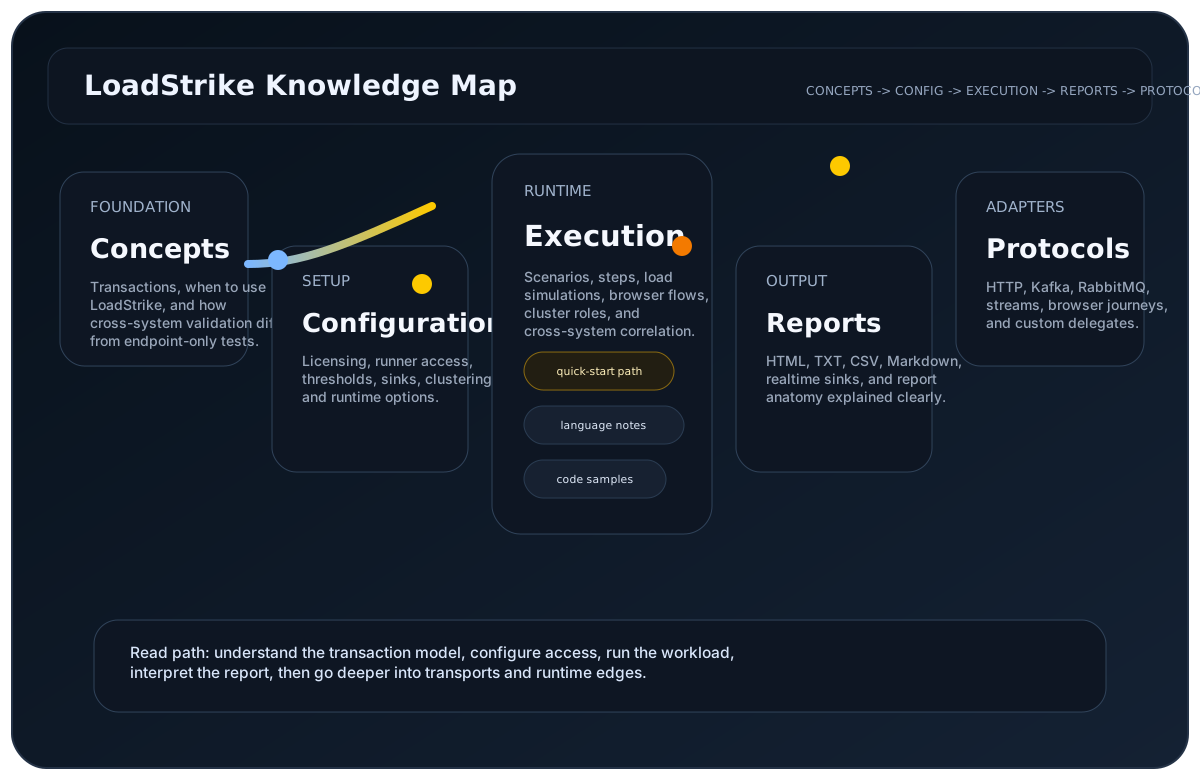
Report Overview

This page explains how to read a LoadStrike report. Use it when you want to know what each section means and where to look first.

Related

Related comparisons

Use these comparison pages if you still need a tool-level decision.

LoadStrike vs Artillery

Compare LoadStrike and Artillery across API testing, event-driven workflows, browser support, reporting depth, operational control, and full-path diagnostics.

LoadStrike vs k6

Compare LoadStrike and k6 across code ergonomics, protocol scope, downstream correlation, reporting depth, browser workflows, and distributed self-hosted execution.

Related

Related integrations

Connect the run output to the observability backend your team already uses.

LoadStrike and Grafana Loki

See how the LoadStrike Grafana Loki sink fits into transaction-aware reporting and public Grafana starter assets.

LoadStrike and Datadog

See how the LoadStrike Datadog sink fits into transaction-aware, self-hosted load testing workflows.

Next steps